The 35th Heartland International Film Festival featured more than 100 films across all genres and sizes. Below is a review of 3 documentaries featured at the festival.
SEIZED
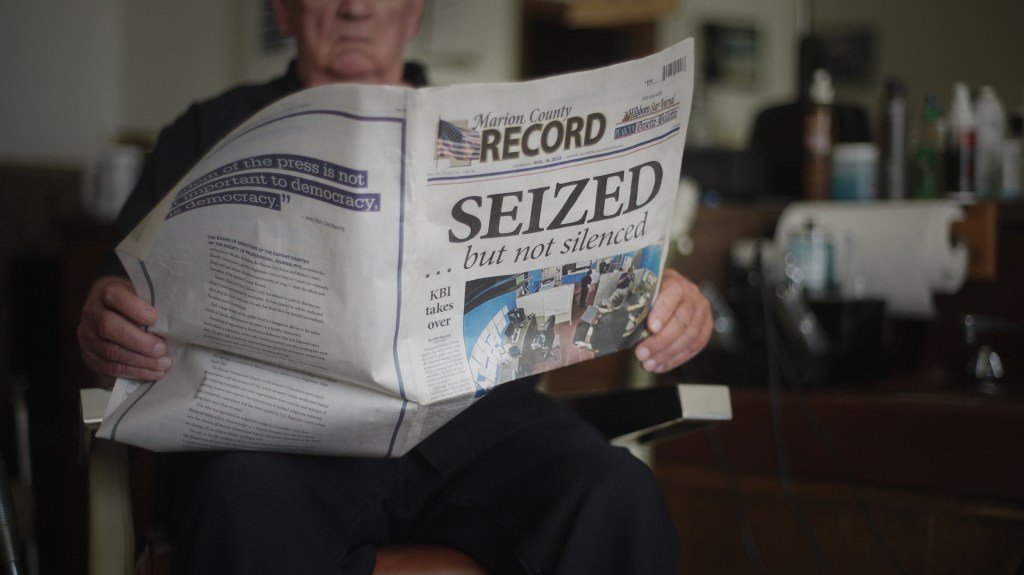
In 2023, police in the small town of Marion, Kansas, raided their local newspaper. Fear of increasing intrusions by the US government was spiking, and the raid of an independent news organization fit right into the anxiety. Then the newspaper’s 98-year-old co-owner died from the stress of the raid. You couldn’t make a more attention-grabbing story if you tried.
The media descended on Marion, including director Sharon Liese and her team, who stuck with the story for the ensuing year. What they captured is extraordinarily close to ordinary: egos, personal grievances, passion, indifference, corruption, and a hell of a lot of farmland.
Liese gets the attention-grabbing bit out of the way quickly. Through a variety of security camera and police footage, the raid itself was well-documented. It’s disquieting to see a number of officers not just in a newspaper office but in the private home of mother-son co-owners Joan and Eric Meyer. But already the film’s humor shines through with the inclusion of the feisty Joan giving the officers plenty of verbal lashings, and a few jabs with her walker for good measure. She comes across as lively, nowhere near death, which condemns the police.
The more complicated figure here is Eric, a rapscallion sort who has based his identity on being the prickly reporter. Obviously he never wanted this to happen, but now that it has, he can’t help but dive into the story. It’s too perfect, and it positions him as the hero. The film clearly questions him, not taking him at his word, but it stops before passing judgment. Seized often does this, stopping just short of sorting out the people and the mystery at its center. It throws a lot of things at the wall: Eric’s complicated personality, the police chief’s troubled past, various townsfolk’s affairs and drunk driving records. The information muddles what was a straightforward story, and while this is framed as responsible journalism, it pulls the film’s punches.
Another understandable but ultimately complicated inclusion is that of new reporter, Finn. He’s from New York City, arrives after the raid, and is trying to get a grasp on the situation. He’s a classic audience surrogate, providing the film with easy reasons for exposition. But he also brings a dismissive vibe, not of the individuals around him or the opportunity to build a journalism career that the small paper provides, but of the idea of Midwestern small towns. He pokes fun at how little there is to do, the demographics, and is clear he could never live here long-term. It’s an outsider’s perspective, but not a particularly inquisitive one, and the documentary as a whole takes the same point of view.
There’s a nagging sense that something is missing from Seized. It found a great story, but it doesn’t do much with it. It settles for a sturdy but unremarkable presentation. It gives a cursory examination of its subjects. It points the finger at the obvious bad guys. But it only teases at getting beyond the surface of the situation, not even pausing long enough for the whole thing to play out (the only court case related to the raid is still ongoing). It’s a classic flyover approach to the Midwest, and it doesn’t seem to realize it’s done it.
Director: Sharon Liese
ALL AMERICAN GIRLS
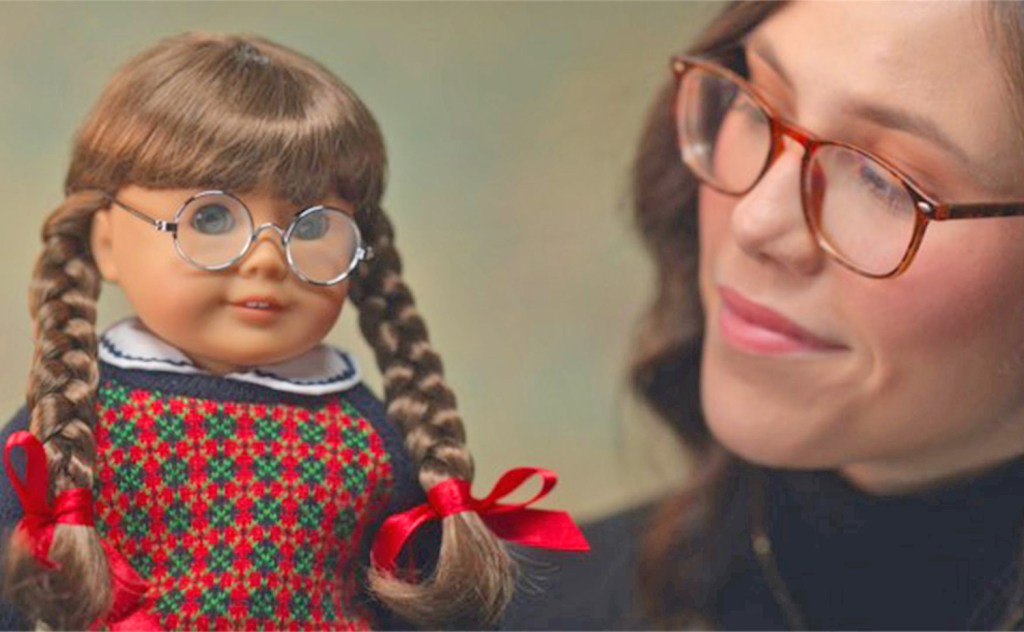
Josefina was my favorite American Girl. I don’t recall why. Perhaps it was simply that she was the character released when I was squarely in the brand’s target demographic of 8-12 year old girls, but for the brief time the documentary All American Girls focuses on her, the parallels to myself and the character were striking. Josefina was quiet, observant, and the books featured an unusual amount of her thinking about things, which are all intrinsic parts of my personality. The American Girl brand is all about making girls an active part of American history, hoping to show them everything they are and can be, which usually translates into spunky, outgoing characters. I certainly grew up to defy America’s pressure to put women into a box (becoming a trans guy probably isn’t what they were going for, but hey, I became who I am), and I did it with Josefina’s outlier temperament.
My favorite only gets a few minutes in the documentary, but that doesn’t mar the pure enjoyment of All American Girls. Yes, it plays on the joy of nostalgia, but it balances that nicely with tidbits about the brand’s history and the triumph of its ideals. The big get here is creator Pleasant Rowland, who has historically shied away from media attention, letting the dolls, books, and money speak for themselves. Staying on the sidelines seems like a deliberate choice, as she comes off as a magnetic force that can easily sell the brand, even in her 80s. She is the main talking head, taking us through the creation of the brand (which, of course, was dismissed by investors) to its purchase by Mattel in 1998. She delights in its success as a women-dominated company and the message it promoted, and director Christy Wegener follows her lead.
The film is quippy, pointed, and not afraid of indulgence. Many of its other talking heads are longtime fans who have incorporated the girls into their adult lives. One recreates famous photos with the dolls. Another collects the dolls and their accoutrements. Others use their image to make snarky social media posts about the regression of women’s rights in America. All of which, it seems, Rowland and the others who worked for the company seem to endorse. Valerie Tripp, the original writer of the book series, is the most outspoken on this front, which opens the door for the documentary to dive into the brand’s progressive ideas that aren’t apparent at a glance. Yes, a significant part of the brand is dolls, but their designs and the characters behind them, especially the ones that went outside of America’s cheery history, provide plenty of evidence that the documentary isn’t making up this slant for the sake of the story. A good portion of time is spent on Addy, a Black girl who goes from slavery to freedom throughout her series, whose release in 1993 sparked considerable backlash.
Attentive viewers will note that fair criticisms of the brand, like the cost of the dolls and Rowland’s demanding leadership, are glossed over. Don’t go into All American Girls expecting a hard-hitting investigation of the company. This is the kind of documentary that wants fans to turn up, merch in hand, and feel good about their enthusiasm. It succeeds at this wonderfully, in no small part because there are lots of wonderful things about American Girl to work with.
Director: Christy Wegener
REHEARSALS FOR A REVOLUTION
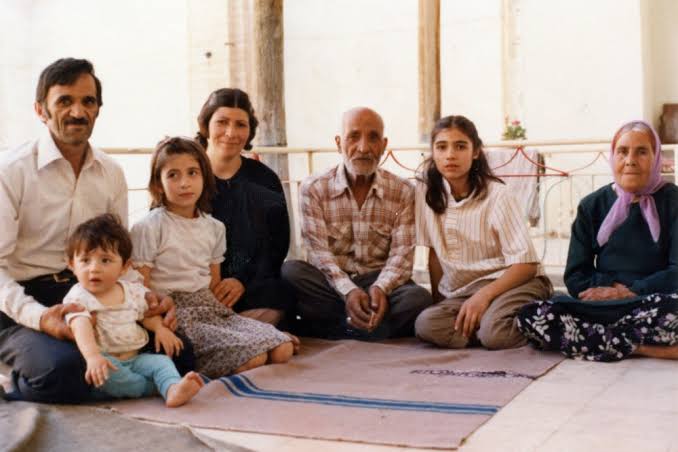
Rehearsals for a Revolution is the best kind of documentary memoir, where its thoughtful, intelligent subject experiences something so immense they can’t quite get their head around it. Director Pegah Ahangarani is that thoughtful, intelligent person, and she uses this documentary to capture her family’s lives as they navigate Iran’s recent turbulent, oppressive decades.
The structure gives away the immensity. Ahangarani doesn’t attempt to tell a full history. Instead, she splits her film up into sections, each focusing on particular people, and often only parts of their lives. She features her mother and father, of course, who were active in the 1979 overthrow of the Shah. Also considered are her uncle, who was part of student protests in the ‘90s, her teacher, who defied the rules for women, her friend, with whom she participates in the 2009 Green Movement, and her daughter, who knows nothing of the struggles.
Each begins their story on a high, with optimism and a fight for the future. Ahangarani captures these moments as flashes. They pass, she rewinds them, plays them again. She searches the smallest moments for pieces of the larger puzzle, some commonality that pushes each of them not to cower to their country’s oppression. There’s very little to work with for some of them, most notably her uncle. This is where Ahangarani’s skill as a filmmaker shines. She makes the smart choice of being honest about the lack of material, and she supplements it with footage of events he would have been at. She probes for his face in the crowds and among the young men being rounded up. The search draws you in, makes you examine each blurry face along with Ahangarani. You are no longer looking at the events but the individuals navigating them. She takes a section that shouldn’t work, that should have been tossed out for lack of material, and makes it a microcosm of her thesis.
Each of her subjects gets the same consideration, and yet none fully coalesce. The missing piece remains just out of reach, taunting her and the audience. This isn’t frustrating. It’s fascinating. To watch so many people fight for so long is rousing, and you begin plucking the good moments from the wreckage. When her friend stands over a crowd, shouting and waving, the beauty of hope shines through. Just as quickly as that joy pokes out, it’s smothered again, leaving Ahangarani to find some sort of ending to hold on to. What she lands on isn’t wholly satisfying. But then, nothing is satisfying about where her country is now.
Director: Pegah Ahangarani


Leave a Reply