Smack in the middle of a planned trilogy, 28 Years Later: The Bone Temple had a lot on the line. The previous film, 28 Years Later, had resurrected the 28 Days Later series nearly 15 years after the last entry. Director Danny Boyle and writer Alex Garland had returned, so its success wasn’t surprising, nor were its themes of isolationism, the nature of evil, and the way life carries on after catastrophes. Which is where director Nia DaCosta comes in. She subs for Boyle for the middle film only, still working with a script from Garland and tasked with keeping the story cohesive and the film successful enough to green-light the third film.
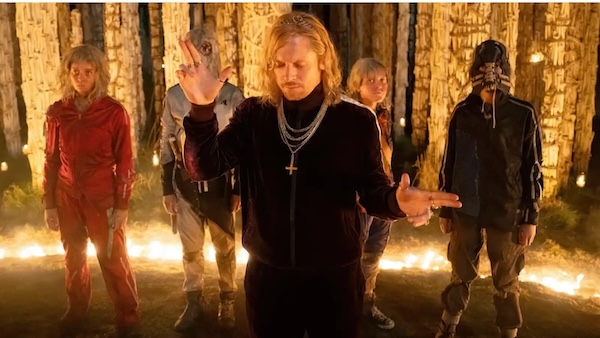
She gets hardly any time story-wise to make her shifts. The Bone Temple picks up right where 28 Years Later left off, with young Spike (Alfie Williams) in the clutches of a group that gives all sorts of bad vibes. They are a group of kids led by one grown man (red flag). The man spouts pseudo-religious nonsense and thinks he’s getting instructions from satan (big red flag). And they all wear matching outfits and call each other Jimmy, because they’re styled after the horrifically abusive child entertainer Jimmy Savile (forget the red flags, just run). They force Spike to join their group and take off to torture and kill whoever they encounter. Spike spends most of the film cowering, with the group’s leader, played by Jack O’Connell, being the focus of this portion of the film. His religious bent brings the series’ examination of evil to particularly blood-curdling places because he believes what he’s saying and is hearing voices in his head. The nature of his psychosis isn’t specified, but when he comes across Ralph Fiennes’ Dr. Kelson, the medical professional recognizes an illness.
The other part of the film follows Kelson’s own exploration of mental states as he befriends Samson (Chi Lewis-Parry), the alpha of the local infected. Samson develops a taste for the morphine Kelson uses to defend himself, and he returns time and again for more. He mellows when under its influence, and Kelson gains something he thought he’d never have again: a friend. But more importantly, Samson begins showing flashes of memory, and his humanity starts creeping back. Kelson theorizes that the infection has a psychological effect, and the morphine is lessening that symptom. The two stories create a neat intersection metaphorically and physically, with one man fighting to regain himself and the other losing himself. The physical collision occurs when the Jimmies spot Kelson’s ossuary. The elaborate display of the dead strikes them as demonic, and they approach expecting to find the devil.
This doesn’t occur until deep into the film, but the meeting is so inevitable that it’s not what The Bone Temple relies on to keep you in your seat. What it focuses on instead is the accoutrements of its themes. The brutality of the Jimmies is lingered upon to make you feel how far away from oneself you can get, even without an infection. For the portion with Kelson, things get light and silly, at least for a zombie movie. He and Sampson revel in their changing fortunes, dancing and laughing with quite a bit of whimsy. When the groups meet, these vibes merge for a showstopping sequence that dances between menace and joy.
DaCosta lets the film relish all of this. Looking back, you’ll realize how little the film relies on its build to that moment. The story creeps forward, lingering instead on these bizarre characters’ reactions to their even more bizarre world. Ralph Fiennes’ had already revealed the gentle nature under Kelson’s alarming exterior in 28 Years Later, and here he digs even deeper into the damage such a man carries when forced to helplessly watch the world burn. Jack O’Connell, though, brings a new kind of survivor. He’s setting his own fires, and O’Connell rides the fine line of portraying him as a very human monster. Where the infected rip and tear, he pokes and prods. Even when in the throes of his illness, it’s clear he’s doing these terrible things by choice. His reasons aren’t profound. He’s not a complex man to figure out. But O’Connell makes him bone-chillingly real, and hence impossible to look away from.
No, The Bone Temple doesn’t move the planned trilogy’s story forward much. But the pause puts many intriguing pieces into place for a thrilling finale.
Release: streaming now on Netflix
Director: Nia DaCosta
Writer: Alex Garland
Cast: Ralph Fiennes, Jack O’Connell, Alfie Williams, Erin Kellyman, Chi Lewis-Parry

 Alex Wheeler Movie Ops
Leave a comment