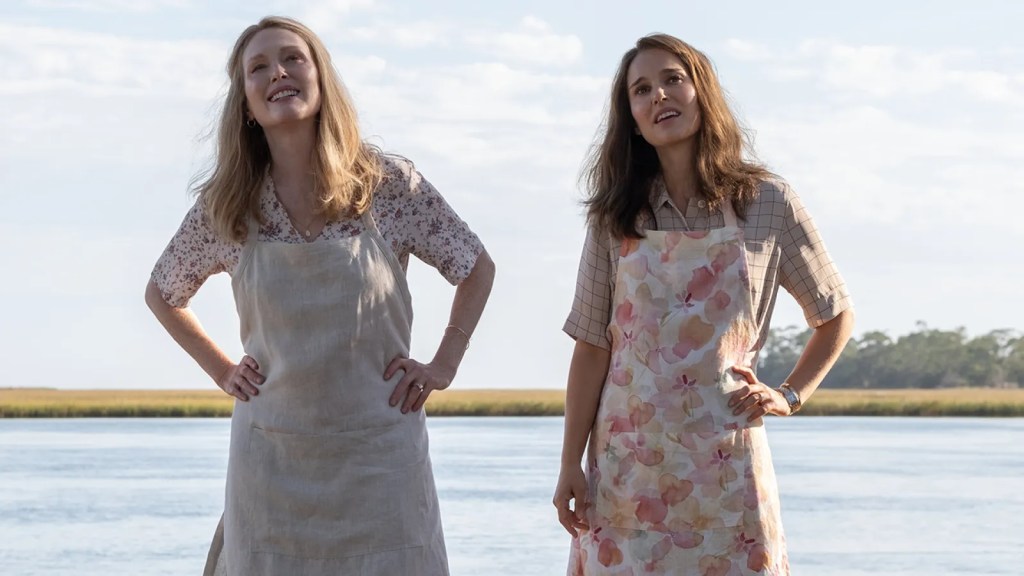
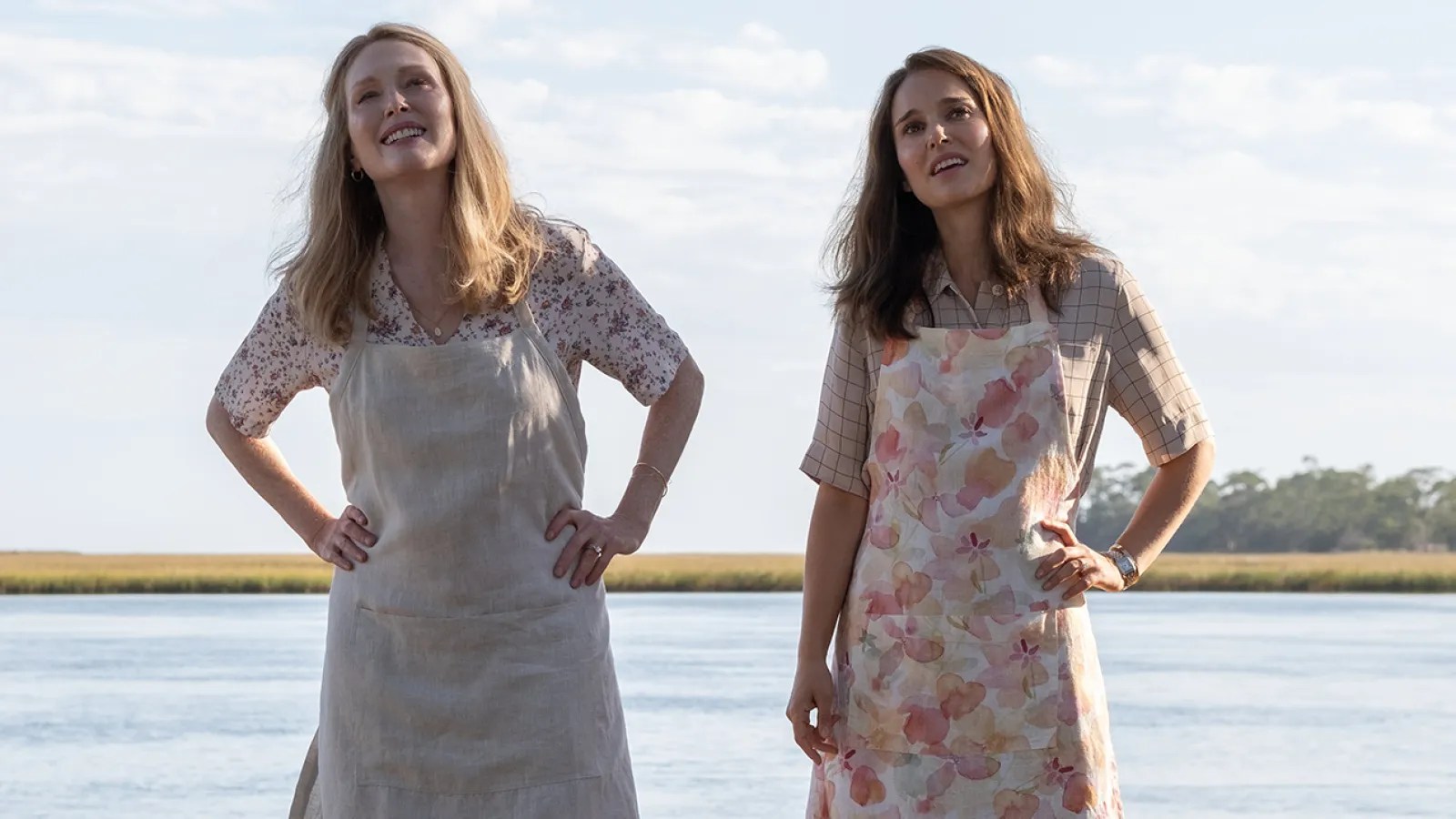
May December is a trick of a movie, and it doesn’t hide it. As a viewer, you’re off balance from the moment the camera zooms in, dramatic music ratcheting up the tension, and Julianne Moore remarks that they might not have enough hot dogs.
Hot dogs? Why is she talking about hot dogs? We’re supposed to be here for an onscreen and offscreen battle between Moore and Natalie Portman, two acting titans, in a deliciously robust Todd Haynes film. And you are. And you aren’t. Because nothing in May December is as it seems.
Ostensibly, the film is about Portman’s Elizabeth visiting the subjects of her next film. They were tabloid figures, famous for the most gossip-worthy of unspeakable acts, and neither Elizabeth, the subjects, nor their small-town friends are quite sure what to make of each other. Elizabeth is laying on the charm (and Hollywood cachet) to get everyone to open up. The subjects, Moore’s Gracie and Charles Melton’s Joe, seem like a mildly boring long-term couple. Except they got together when Moore was in her 30s and Joe was in 7th grade. They’ve remained together through jail and community ostracization. But can they survive Hollywood’s viscous eye?
Haynes applies a melodramatic lens to the story, which immediately reeks of improperness. A child couldn’t consent to such things, and the scenario is not something we should derive any pleasure from. But we’ve seen this be tabloid fodder time and again. People choose to spend their time and money on salacious stories like these, and in the movie’s world Elizabeth is there because movie executives are betting people will give up both again for a glimpse of the horror.
For their part, Joe and Gracie seem like a happy couple. Their youngest children are about to graduate high school, Gracie has a baking business, Joe works at the hospital and saves monarch butterflies. Their cookout, where Gracie worries about their hot dog stash, is healthily attended. Life moved on, once their relationship became legal. But, of course, nothing is as wholesome as it seems.
This is a movie about rot. Its slow settle into the body, its all-encompassing nature, and how easy its progression is to ignore. Gracie and Joe are, of course, a rotten couple. This is not a movie trying to justify, or even harbor, healthy thoughts about their relationship. The only character who is spared the melodramatic lens is Joe, who undergoes a tragic arc that is both respectful and deeply human. A scene on a roof, a moment of bonding with his son, is one of the most heartbreaking things you’ll see all year. I’m not sure how Haynes incorporated this sincerity into this arch film, but he did, and it’s the only comfort for viewers wondering whether the film has any ethics at all.
Gracie and Elizabeth, on the other hand, are vipers throughout. Elizabeth is the more overt, constantly putting on a front to slide her way into these people’s lives. Gracie is, at first, completely obtuse, but Moore slips the mask off expertly. The promised showdown between the two actresses is delivered, just in a far more uncomfortable way than you’d expect. Both are depicting awful, awful people, and while they are trying to outwit each other, neither are cunning manipulators. They are everyday people wallowing in the muck of life, and watching them spar in such unimpressive ways is deeply uncomfortable.
Haynes softens the horror with that melodramatic lens, which mercifully removes you from reality. This is based on true events, but it’s not interested in telling reality. And that is the ultimate trick, the one staring you in the face the whole time. May December isn’t about exploring the truth of this unconscionable relationship; it’s about exploring the folly of thinking there’s anything interesting here at all.
The point is driven home late in the film, as one of Gracie’s many masks slides off and Elizabeth pounces on the revelation. But what she’s learned is mundane. And Elizabeth practices, minutely, the obvious revelation. By the time she returns to Hollywood to put the “truth” of Gracie and Joe’s lives onscreen, the folly of the endeavor is laid bare. Elizabeth was never interested in the truth. She was there for the scandal, the same scandal she knew an audience would eat up. That’s all Hollywood was interested in, too. Haynes is telling on his own industry, calling them out for reprehensible behavior, and bringing a bit of the oft-missed humanity to the horror.
Release: Available now in select theaters. On Netflix December 1st
Director: Todd Haynes
Writers: Samy Burch
Cast: Natalie Portman, Julianne Moore, Charles Melton




 Alex Wheeler Movie Ops
Leave a comment